Garlic
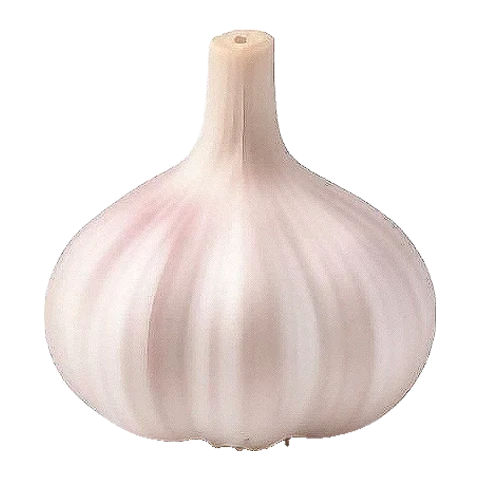
Fresh garlic arrives in June; dried, it keeps until winter.
- Season: June, July, August, September, October
- Peak season: July, August
- Botanical family: Amaryllidaceae
History
Native to Central Asia, garlic has been grown for more than 5,000 years. The Egyptians gave it to the workers who built the pyramids, and the Romans to their soldiers. Legend has it that the lips of the future King Henri IV were rubbed with a garlic clove at his birth.
Origin and growing regions
France produces renowned garlic, mostly in the south:
- Occitanie (Lomagne, Lautrec)
- Drôme
- Provence
Several French garlics have a PGI, such as white Lomagne garlic, pink Lautrec garlic and Drôme garlic; purple Cadours garlic has a PDO.
Benefits
Garlic adds flavour and interesting compounds:
- Allicin: Released when you crush a clove, it gives garlic its typical smell.
- Sulphur compounds: Studied for their role in heart health.
- Flavour without salt: It helps cut down on salt in dishes.
- Small amounts: One or two cloves are enough to flavour a dish.
Varieties
- White garlic: The most common, like Lomagne garlic (PGI).
- Purple Cadours garlic: PDO, powerful taste.
- Pink Lautrec garlic: PGI, mild, keeps for a long time.
- Wet garlic: Picked fresh in spring, very mild.
- Black garlic: Fermented garlic, sweet liquorice taste.
Zero waste
- Storing: Somewhere dry and airy, in a basket: several months. Never in the fridge, it sprouts.
- Freezing: Peeled, as cloves or chopped in oil in an ice-cube tray: up to 6 months.
- Nothing goes to waste: A sprouting clove can be planted in a pot: snip the shoots like chives. The skins flavour a stock.