Aubergine
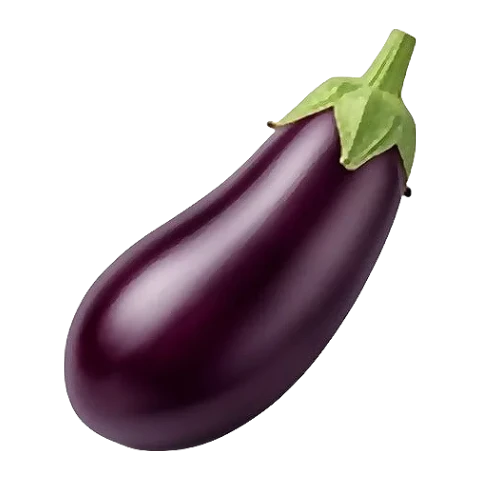
Melting flesh that soaks up oil; the star of ratatouille and aubergine dip.
- Season: June, July, August, September
- Peak season: July, August
- Botanical family: Solanaceae
History
Native to India and South-East Asia, the aubergine was spread around the Mediterranean by Arab traders in the Middle Ages, first to Spain. Long viewed with suspicion, it settled in the south of France in the 17th and 18th centuries before becoming a staple of Provençal cooking.
Origin and growing regions
French aubergines grow in the southern sun and under cover:
- Provence-Alpes-Côte d’Azur
- Occitanie
- Nouvelle-Aquitaine
Benefits
Light and melting, the aubergine is best cooked with little fat:
- Low in calories: About 25 kcal per 100 g, as long as you go easy on the oil, which it soaks up like a sponge.
- Fibre: Helps you feel full and aids digestion.
- Antioxidants in the skin: The purple skin contains anthocyanins: no need to peel it.
- Potassium: Helps fluid balance.
Varieties
- Violette de Barbentane: Long and dark purple, the Provençal classic.
- Graffiti: Streaked mauve and white, delicate flesh.
- Ronde de Valence: Round, light purple, ideal for stuffing.
- White: Egg-shaped, mild flesh.
- Long Chinese: Thin, few seeds, cooks very quickly.
Zero waste
- Storing: Somewhere cool, out of the fridge if possible: 4 to 5 days.
- Freezing: Raw, it turns spongy. Grilled or as a dip: up to 6 months.
- Nothing goes to waste: A slightly wrinkly aubergine ends up as a dip or a moussaka. The grilled skin flavours a stock.