Basil
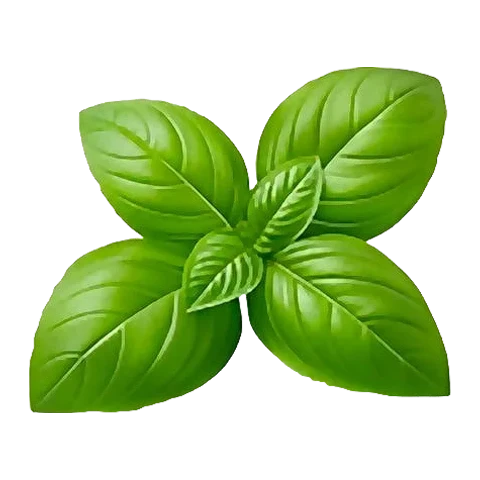
A sun-loving herb that hates the cold: never put it in the fridge.
- Season: May, June, July, August, September
- Peak season: July, August
- Botanical family: Lamiaceae
History
Native to India, where a close relative (tulsi) is a sacred plant, basil reached the Mediterranean via the Middle East. Its name comes from the Greek “basilikon”, meaning “royal”. It became the iconic herb of Provençal and Italian cooking.
Origin and growing regions
Basil loves heat; it is grown outdoors in summer and in greenhouses:
- Provence-Alpes-Côte d’Azur
- Occitanie
- Pays de la Loire (greenhouse)
Provençal pistou, made with basil, garlic and olive oil, is its most famous use.
Benefits
Basil brings summer dishes to life:
- Essential oils: They give its leaves their powerful scent.
- Vitamin K: Present in good amounts in the leaves.
- Flavour without salt: Another way to season dishes.
- Add at the end: Heat makes its aroma disappear.
Varieties
- Sweet Genovese: The pesto basil.
- Greek basil: Small, very aromatic leaves, grown in pots.
- Purple: Purple leaves, pretty in salads.
- Thai: Aniseed taste, purple stems.
- Lemon: Lemony scent.
Zero waste
- Storing: As a bunch in a glass of water, at room temperature, never in the fridge: 1 week.
- Freezing: Chopped in olive oil in an ice-cube tray: up to 6 months.
- Nothing goes to waste: The stems flavour a tomato sauce or an oil. Wilting basil ends up as pesto.