Beetroot
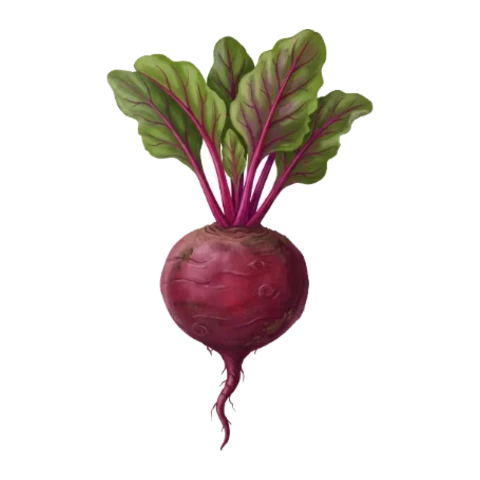
A sweet root, sold raw or ready-cooked, whose juice turns everything pink.
- Season: July, August, September, October, November, December, January, February, March
- Peak season: October, November, December
- Botanical family: Amaranthaceae
History
The Romans mostly ate the leaves of wild beet, which came from Mediterranean shores. The red root we know developed in Europe from the 16th century. Its cousin, sugar beet, allowed France to produce its own sugar under Napoleon.
Origin and growing regions
Beetroot is grown mainly in the north and west of France:
- Hauts-de-France
- Normandy
- Brittany
- Centre-Val de Loire
Benefits
Beetroot is sweet and colourful:
- Vitamin B9: Useful for growth.
- Betalains: The pigments that colour it are antioxidants.
- Natural nitrates: They support good circulation.
- Fibre: Gentle on digestion.
Varieties
- Crapaudine: Old elongated variety, very sweet.
- Chioggia: Striped pink and white inside.
- Detroit: Round and dark red, the most common.
- Golden: Milder, doesn’t stain.
Zero waste
- Storing: Raw, leaves removed, in the crisper: 2 to 3 weeks. Cooked, vacuum-packed: 1 week.
- Freezing: Cooked and diced: up to 6 months.
- Nothing goes to waste: The leaves cook like spinach. Peelings can colour pasta dough or a risotto.