Broccoli
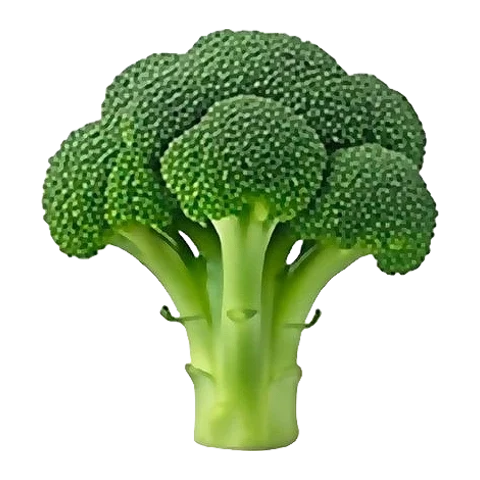
We eat its flower buds before they open; cook it briefly to keep it green.
- Season: June, July, August, September, October, November
- Peak season: September, October
- Botanical family: Brassicaceae
History
Broccoli descends from the wild Mediterranean cabbage. It was selected in Italy in ancient times, then developed by Italian gardeners during the Renaissance. It arrived in France in the 16th century, traditionally with Catherine de’ Medici, and was long called “Italian cabbage”.
Origin and growing regions
French broccoli is grown mainly on the mild, damp western coasts:
- Brittany
- Normandy
- Pays de la Loire
Benefits
Broccoli is one of the most nutrient-dense vegetables:
- Vitamins C and K: One serving covers a large share of daily needs.
- Sulphur compounds: It contains sulforaphane, studied for its protective properties.
- Vitamin B9: Especially important during pregnancy.
- Short cooking: A few minutes of steaming keeps its colour and vitamins.
Varieties
- Calabrese: Big dark green head, the best seller.
- Purple sprouting: Thin stems, cooked whole.
- Tenderstem (broccolini): Long tender stems, mild taste.
- Romanesco: Pale green spiral points.
Zero waste
- Storing: In the fridge, in a bag with holes: 3 to 5 days. It turns yellow quickly at room temperature.
- Freezing: As florets blanched for 2 min: up to 12 months.
- Nothing goes to waste: The peeled stalk is as good as the florets: in sticks, in soup or grated in salad. The leaves cook like spinach.