Blackcurrant
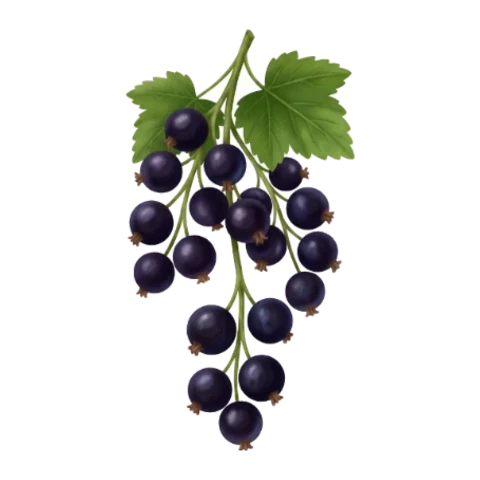
A small black berry with a powerful scent, the emblem of Burgundy.
- Season: June, July, August
- Peak season: July
- Botanical family: Grossulariaceae
History
Blackcurrants grow wild in northern Europe. Long used as a remedy, the bush was nicknamed “the tree of a thousand virtues” in the 18th century. In the 19th century, liqueur makers in Dijon invented crème de cassis, which made Burgundy famous.
Origin and growing regions
French blackcurrants are grown mostly in the east:
- Bourgogne-Franche-Comté (Côte-d’Or)
- Pays de la Loire
- Grand Est
Burgundy blackcurrants have a PDO for crème de cassis.
Benefits
The blackcurrant is packed with vitamins:
- Vitamin C: About 180 mg/100 g, three times more than an orange.
- Antioxidants: Its black pigments are very rich in them.
- Fibre: Thanks to its tiny seeds.
- Potassium: Helps fluid balance.
Varieties
- Noir de Bourgogne: Historic variety, very fragrant.
- Andega: Big fruit, ideal for jam.
- Ben Lomond: Productive and hardy.
- Titania: Big, very sweet berries.
Zero waste
- Storing: In the fridge, on the stalk, unwashed: 2 to 3 days.
- Freezing: Off the stalk, flat on a tray: up to 12 months.
- Nothing goes to waste: Slightly damaged blackcurrants make cordial, jelly or sorbet.