Button mushroom
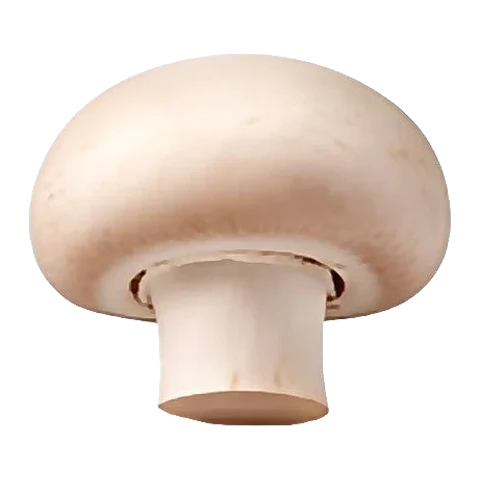
Grown in caves all year round; it’s a mushroom, neither fruit nor vegetable in botanical terms.
- Season: all year round
- Peak season: October, November
- Botanical family: Agaricaceae
History
Button mushroom growing began in the 17th century in the market gardens around Paris. In the 19th century it moved into the city’s old underground quarries, which gave it its French name, “champignon de Paris”. It later moved to the tufa-stone caves of the Loire Valley.
Origin and growing regions
Grown away from the light, button mushrooms are produced all year round:
- Loire Valley (Saumur area)
- Île-de-France
- Hauts-de-France
Benefits
Button mushrooms are light and nourishing:
- Very low in calories: About 22 kcal per 100 g.
- B vitamins: Especially B2 and B3, which support energy metabolism.
- Selenium: An antioxidant trace element.
- Meaty texture: Great for lightening meat dishes.
Varieties
- White button: The classic button mushroom.
- Chestnut: Same species, stronger taste.
- Portobello: A button mushroom left to grow, perfect grilled.
- Field mushroom: Its wild cousin from the meadows.
Zero waste
- Storing: In the fridge, in a paper bag, never plastic: 3 to 4 days.
- Freezing: Sliced and fried: up to 6 months.
- Nothing goes to waste: The stalks make a stock or a duxelles. Slightly dry mushrooms can be blended into soup.