Chestnut
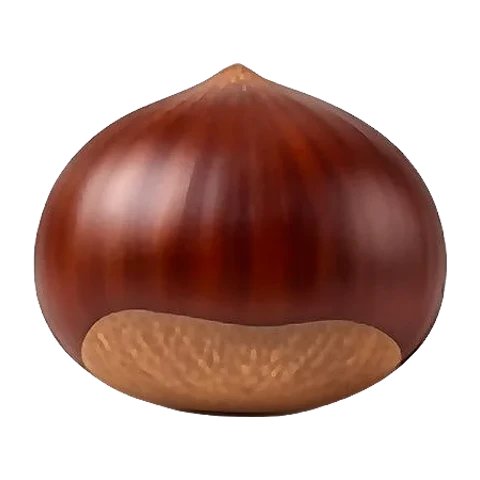
A nut from the forests of Ardèche and the Cévennes, to roast or turn into spread.
- Season: October, November, December
- Peak season: October, November
- Botanical family: Fagaceae
History
The chestnut tree has grown in southern Europe since ancient times. In the Cévennes, Ardèche and Corsica it was called “the bread tree”: for centuries, its dried and ground fruit fed mountain communities.
Origin and growing regions
French chestnuts grow in mid-mountain regions:
- Ardèche
- Cévennes
- Corsica
- Limousin
Ardèche chestnuts have a PDO, as does Corsican chestnut flour.
Benefits
The chestnut is a very nourishing winter fruit:
- Complex carbohydrates: Lasting energy, about 180 kcal per 100 g cooked.
- Fibre: Helps you feel full.
- Gluten-free: Its flour suits people with gluten intolerance.
- Minerals: Potassium, magnesium and B vitamins.
Varieties
- Marron: Big nut with a single seed, for marrons glacés.
- Bouche de Bétizac: Big and easy to peel.
- Comballe: From Ardèche, fragrant, for flour.
- Ardèche chestnut: PDO, mild and sweet.
Zero waste
- Storing: In the fridge, in a bag with holes: 1 week. They dry out quickly in the air.
- Freezing: Raw and slit, or peeled after cooking: up to 12 months.
- Nothing goes to waste: Extra chestnuts can be turned into chestnut spread, purée or flour.