Quince
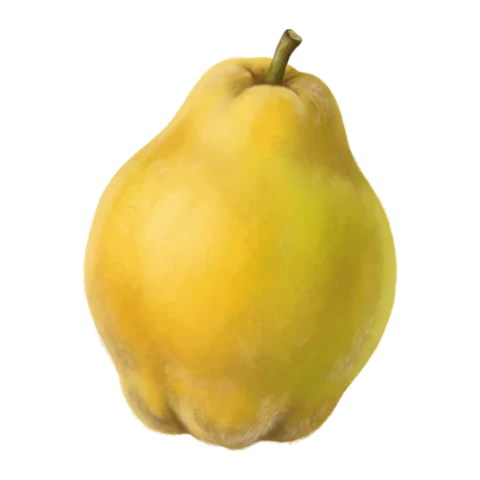
A hard, fragrant fruit, inedible raw, that becomes delicious as jelly or fruit paste.
- Season: September, October, November, December
- Peak season: October, November
- Botanical family: Rosaceae
History
Native to the Caucasus and Persia, the quince is one of the oldest cultivated fruits. The Greeks gave it to newlyweds as a symbol of love. The word “marmalade” comes from the Portuguese “marmelo”, meaning quince.
Origin and growing regions
In France, quinces grow mostly in the south and west:
- Provence-Alpes-Côte d’Azur
- Occitanie
- Nouvelle-Aquitaine
- Pays de la Loire
Benefits
The quince is fragrant and rich in fibre:
- Pectin: Makes jellies set naturally.
- Fibre: Gentle on digestion.
- Vitamin C: Especially in fresh fruit.
- Tannins: Give its raw astringency.
Varieties
- Champion: Big golden fruit, very fragrant.
- Vranja: Huge and early.
- Portugal: Elongated, ideal for fruit paste.
- Provence quince: Local southern variety.
Zero waste
- Storing: Somewhere cool and dry, away from other fruit: several weeks.
- Freezing: Cooked, in quarters or purée: up to 12 months.
- Nothing goes to waste: Peels and cores, rich in pectin, make jelly.