Coriander
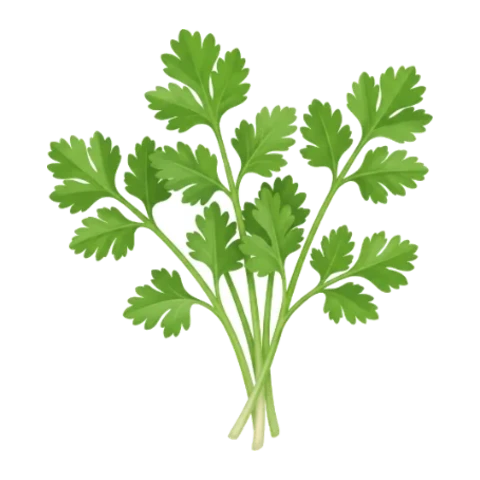
A fresh herb with a lemony scent, essential in Asian, North African and Latin American cooking.
- Season: May, June, July, August, September, October
- Peak season: June, July, August
- Botanical family: Apiaceae
History
Coriander is one of the oldest herbs: its seeds were found in Tutankhamun’s tomb. The Romans used it to preserve meat. From the Near East, it spread to every continent.
Origin and growing regions
In France, fresh coriander is mostly grown by market gardeners:
- Provence-Alpes-Côte d’Azur
- Pays de la Loire
- Île-de-France
Benefits
Coriander adds flavour and good things:
- Vitamin K: Useful for blood clotting.
- Antioxidants: Especially in fresh leaves.
- Flavour without salt: It livens up dishes.
- Digestion: The seeds are traditionally used in tea.
Varieties
- Common coriander: Broad leaves, intense scent.
- Large-seeded coriander: Grown for its seeds.
- Vietnamese coriander: A different plant with a similar, spicier taste.
Zero waste
- Storing: As a bunch, stems in a glass of water in the fridge: 1 week.
- Freezing: Chopped, in an ice-cube tray with a little oil: up to 6 months.
- Nothing goes to waste: Stems flavour a soup or stock. Roots go into curry paste.