Courgette
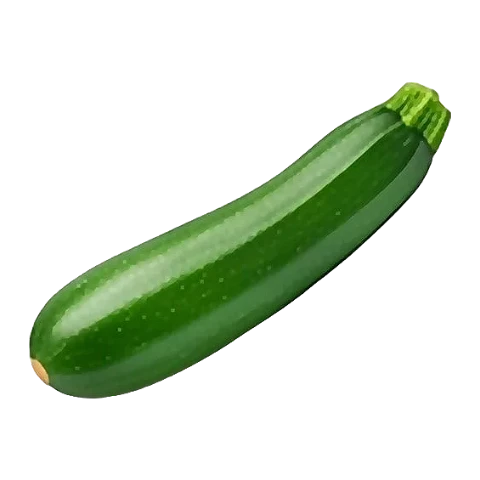
Productive and mild, eaten raw in ribbons or pan-fried in minutes.
- Season: June, July, August, September
- Peak season: July, August
- Botanical family: Cucurbitaceae
History
Squashes come from Central America, where they were grown thousands of years ago. The courgette itself is an Italian selection (the “zucchina”), made by harvesting certain squashes very young. It only really spread in France in the 20th century, especially after the 1950s.
Origin and growing regions
French courgettes are grown mainly in the south-east and west:
- Provence-Alpes-Côte d’Azur
- Occitanie
- Pays de la Loire
The round Nice courgette is a local speciality, perfect for stuffing.
Benefits
The courgette is one of the lightest summer vegetables:
- Very hydrating: About 95 % water for 16 kcal per 100 g.
- Vitamin B9: Helps cell renewal.
- Potassium: Helps fluid balance.
- Easy to digest: Its thin skin and tender flesh make it gentle on the stomach.
Varieties
- Verte de Milan: Long and dark green, the most common.
- Round Nice: Round, perfect for stuffing.
- Yellow: Mild, pretty raw in ribbons.
- Blanche de Virginie: Pale green, very tender flesh.
- Tromboncino: Long and curved, firm flesh.
Zero waste
- Storing: In the vegetable drawer, in a cloth bag: 1 week.
- Freezing: Sliced and fried for 2 min: up to 6 months. Grated raw for cakes and fritters.
- Nothing goes to waste: Big courgettes forgotten on the plant can be stuffed or made into soup. The flowers can be eaten as fritters.