Spinach
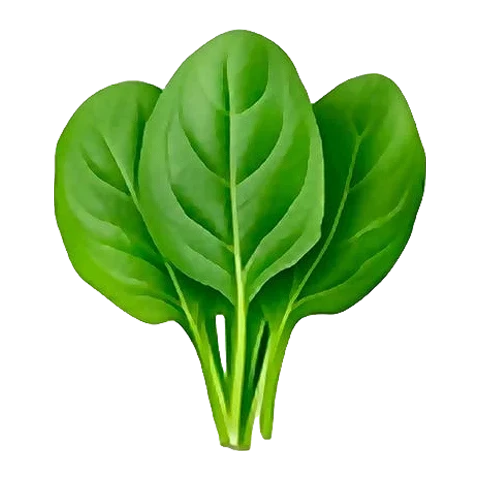
Spring and autumn leaves, eaten raw in salads or just wilted.
- Season: March, April, May, September, October, November
- Peak season: April, October
- Botanical family: Amaranthaceae
History
Native to Persia, spinach was introduced to Spain by the Arabs around the 11th century. Catherine de’ Medici, who loved it, is said to have made it popular at the French court: dishes “à la florentine” are named in her honour. Its reputation as a super-rich source of iron is partly a myth, kept alive by Popeye.
Origin and growing regions
Spinach prefers the cool seasons, spring and autumn:
- Hauts-de-France
- Brittany
- Normandy
- Provence
Benefits
Spinach is rich in micronutrients:
- Vitamin B9: One of the best plant sources.
- Vitamin K: Abundant in the leaves.
- Lutein: A pigment that supports eye health.
- Iron: Present, but in a form less easily absorbed than iron from meat.
Varieties
- Baby spinach: Young tender leaves, eaten raw.
- Winter spinach: Big thick leaves, resists the cold.
- Spring spinach: Smooth leaves, grows fast.
Zero waste
- Storing: In the fridge, in a bag, unwashed: 2 to 3 days.
- Freezing: Blanched for 1 min, squeezed into balls: up to 12 months.
- Nothing goes to waste: The stems can be fried with garlic. Wilted leaves go into a quiche, an omelette or a smoothie.