Broad bean
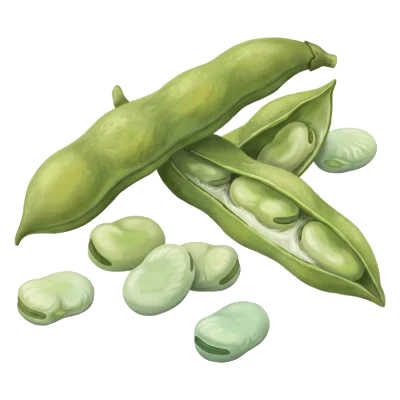
A spring pod: shell it, then slip the beans out of their skins for a sweet, tender taste.
- Season: from April to July
- Peak season: May, June
- Botanical family: Fabaceae
History
Grown around the Mediterranean since the Neolithic, the broad bean is one of the oldest pulses. Before beans arrived from the Americas, it was Europe’s staple dried legume: eaten fresh in spring and dried through the winter.
Origin and growing regions
In France, fresh broad beans are mostly grown in the South, where they overwinter in the ground:
- Provence-Alpes-Côte d’Azur
- Occitanie
- Nouvelle-Aquitaine
- Pays de la Loire
The first small, tender beans of April are eaten raw with a pinch of salt.
Benefits
Broad beans pack a lot into a small volume:
- High in protein: About 8 g per 100 g fresh: a good base for a meat-free meal.
- Fibre: Helps you feel full and supports digestion.
- Folate: Supports cell renewal.
Varieties
- Aguadulce: Long pods, large beans: the most widely grown.
- Précoce d’Aquitaine: Early, ideal for first harvests.
- Dwarf broad bean: Short and compact, perfect for small gardens.
Store without waste
- Storage: In their pods, in the vegetable drawer: only 2 to 3 days.
- Freezing: Shelled and blanched for 1 min: up to 12 months.
- Nothing goes to waste: Very young pods can go into soup. Large end-of-season beans make a purée.