Fig
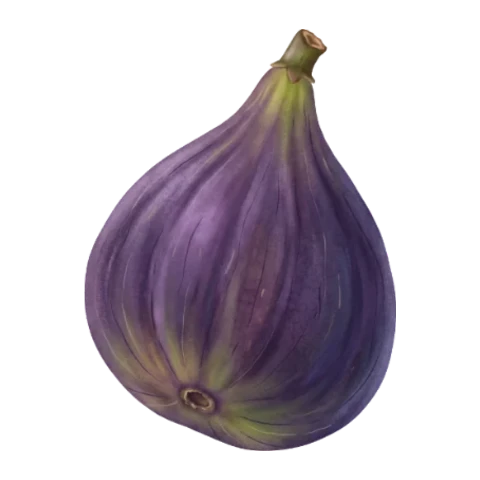
An ancient Mediterranean fruit, best eaten very ripe, fresh or roasted.
- Season: August, September, October
- Peak season: September
- Botanical family: Moraceae
History
The fig is one of the very first fruits grown by humans, more than 10,000 years ago in the Near East. The Greeks and Romans made it a staple food, fresh or dried. It spread all around the Mediterranean, where fig trees grow almost everywhere.
Origin and growing regions
French figs grow in the sunny south:
- Provence-Alpes-Côte d’Azur (Solliès-Pont)
- Occitanie
- Corsica
- Nouvelle-Aquitaine
The Solliès fig, from the Var, has a PDO.
Benefits
The fig is sweet and nourishing:
- Fibre: Very rich, fresh or dried.
- Calcium: One of the fruits with the most.
- Potassium: Helps fluid balance.
- Energy: About 70 kcal/100 g fresh.
Varieties
- Violette de Solliès: PDO from the Var, the most famous.
- Dauphine: Big early purple fig.
- Goutte d’or: Green fig, very sweet.
- Noire de Caromb: Small, very fragrant.
Zero waste
- Storing: In the fridge, not piled up: 2 to 3 days.
- Freezing: Whole or in quarters: up to 12 months, for compotes and cakes.
- Nothing goes to waste: Damaged figs make jam or chutney, perfect with cheese.