Flageolet bean
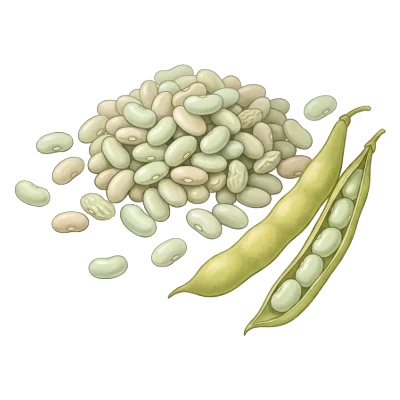
A small, pale green bean picked before it fully ripens: fresh in late summer, dried the rest of the year.
- Season: from July to October
- Peak season: August, September
- Botanical family: Fabaceae
History
The flageolet was born in France in the 19th century, around Arpajon, south of Paris. It was selected to keep its green colour by harvesting it before it fully ripened.
Origin and growing regions
Flageolets are mainly grown in northern and western France:
- Brittany
- Hauts-de-France
- Centre-Val de Loire
- Île-de-France (Arpajon)
The green flageolets of Vendée and Arpajon are the best known.
Benefits
The flageolet is a delicate, easy-to-digest bean:
- Plant protein: About 7 g per 100 g cooked.
- Fibre: Keeps you full for longer.
- Iron: Helps carry oxygen in the body.
Varieties
- Chevrier: The historic variety, deep green.
- Arpajon green flageolet: Fine and melting.
- Vendée flageolet: Grown on the Atlantic coast.
Store without waste
- Storage: Fresh, in their pods: 3 days. Dried, in a jar somewhere dry: 1 year.
- Freezing: Cooked, in their liquid: up to 3 months.
- Nothing goes to waste: Leftovers blend into a spread with garlic and oil.