Coco bean
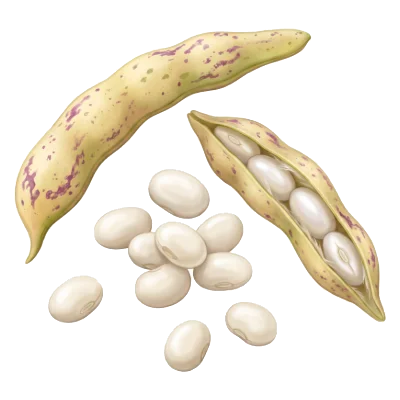
A fresh shelling bean, white or speckled pink: quick to cook, no soaking, and wonderfully creamy.
- Season: from July to October
- Peak season: August, September
- Botanical family: Fabaceae
History
Beans arrived from the Americas in the 16th century. The round, smooth “coco” varieties became a favourite in French kitchen gardens, eaten fresh and just shelled at the end of summer.
Origin and growing regions
Fresh coco beans can be found at markets in many regions:
- Brittany (coco de Paimpol PDO)
- Pays de la Loire
- Nouvelle-Aquitaine
- Hauts-de-France
The coco de Paimpol, white and semi-dried, is France’s only protected designation of origin for a fresh bean.
Benefits
Fresh coco beans are easier to digest than dried beans:
- Plant protein: Paired with a grain, they make a complete meal.
- Fibre: Helps you feel full.
- Potassium: Supports muscle function.
Varieties
- Coco de Paimpol: White, semi-dried, a Breton PDO.
- Pink coco: Speckled pink; turns pale when cooked.
- White coco: Round and creamy, perfect in stews.
Store without waste
- Storage: In their pods, kept cool: 3 to 4 days.
- Freezing: Shelled raw, laid flat in a bag: up to 6 months, cook from frozen.
- Nothing goes to waste: The flavourful cooking water makes a good soup base.