Dried bean
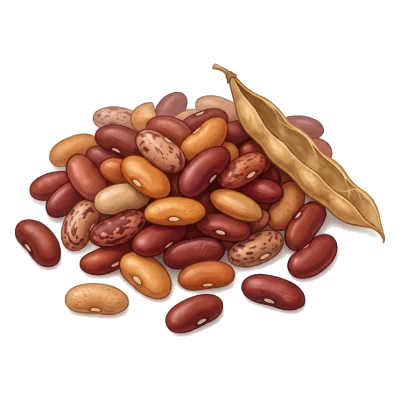
Lingot, Tarbais, mogette: storage beans harvested in autumn and simmered all winter.
- Season: all year round
- Peak season: October, November, December, January, February
- Botanical family: Fabaceae
History
Brought from the Americas in the 16th century, the bean quickly replaced the broad bean in country cooking. Dried, it kept all winter, becoming the heart of cassoulet, garbure and the Vendée mogette.
Origin and growing regions
Several French dried beans carry a quality label:
- Occitanie (Tarbais bean, Label Rouge and PGI)
- Pays de la Loire (Vendée mogette)
- Hauts-de-France (northern lingot)
- Auvergne-Rhône-Alpes
The Tarbais bean is traditionally grown at the foot of maize, which it uses as a stake.
Benefits
Dried beans are a complete winter food:
- Plant protein: About 8 g per 100 g cooked.
- Fibre: Among the richest of all pulses.
- Potassium and magnesium: Support muscle function.
Varieties
- Tarbais: Large, white and thin-skinned: the king of cassoulet.
- Lingot: Long, white and very creamy.
- Mogette: White and flat, a Vendée speciality.
- Kidney bean: Dark red, for chilli.
Store without waste
- Storage: Dried, in a jar somewhere dry: 1 year (they harden after that).
- Freezing: Cooked, in their liquid: up to 6 months.
- Nothing goes to waste: Leftover beans blend into soup or a spread.