Kiwi
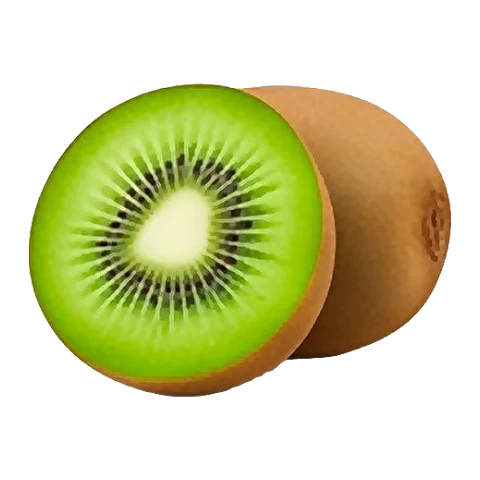
Adour kiwis have a PGI and a Label Rouge.
- Season: November, December, January, February, March, April
- Peak season: December, January, February
- Botanical family: Actinidiaceae
History
Native to China, where it was called the “Chinese gooseberry”, the kiwi was developed in New Zealand in the early 20th century. Renamed “kiwi” in 1959 for export, after New Zealand’s national bird, it has been grown in France since the 1960s.
Origin and growing regions
France grows kiwis mainly in the south-west:
- Nouvelle-Aquitaine (Adour, Landes)
- Corsica
- Auvergne-Rhône-Alpes
Adour kiwis have both a PGI and a Label Rouge.
Benefits
The kiwi is one of the fruits richest in vitamin C:
- Vitamin C: A single kiwi covers a large share of daily needs.
- Fibre: Known to help digestion.
- Actinidin: An enzyme that helps digest proteins.
- Moderate energy: About 60 kcal per 100 g.
Varieties
- Hayward: The green classic, keeps for a long time.
- Gold kiwi: Golden flesh, sweeter.
- Kiwiberry: The size of a grape, eaten with the skin.
- Adour kiwi: South-West PGI.
Zero waste
- Storing: At room temperature to ripen, then in the fridge: 2 to 3 weeks.
- Freezing: Peeled, sliced: up to 6 months, for smoothies.
- Nothing goes to waste: Well-washed kiwi skin can be eaten: it’s rich in fibre. An overripe kiwi makes a smoothie.