Melon
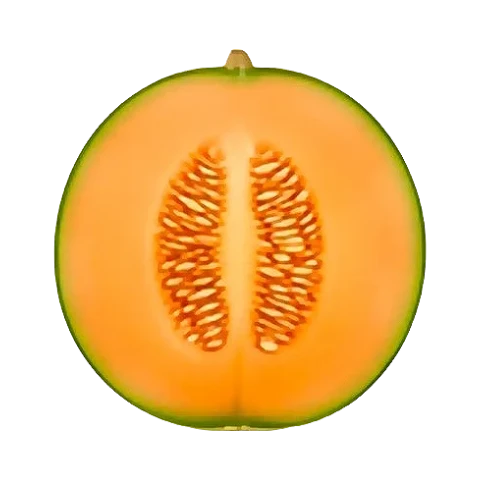
A good melon is heavy for its size and its stalk comes away on its own.
- Season: June, July, August, September
- Peak season: July, August
- Botanical family: Cucurbitaceae
History
The melon belongs to the Cucurbitaceae family. Native to Africa or Central Asia, it was already grown in ancient Egypt 2,700 years BC. Introduced to Italy and then France in the 15th century, notably by the popes of Avignon, it became a favourite at royal tables under François I and Louis XIV. Alexandre Dumas loved it so much that he gave part of his works to the Cavaillon library in exchange for a lifetime supply of 12 melons a year.
Origin and growing regions
Today France is a major European melon producer, grown mainly in three large areas:
- South-East (Cavaillon, Châteaurenard)
- South-West (Quercy, Lectoure)
- Centre-West (Haut-Poitou, Vendée)
Quercy melons and Haut-Poitou melons have a PGI (Protected Geographical Indication), which guarantees local know-how and a minimum sugar content.
Benefits
The melon is the ultimate summer hydration ally:
- Maximum hydration: Over 90 % water, it is refreshing and very low in calories (about 34 kcal per 100 g).
- Rich in beta-carotene: Its bright orange flesh shows a high pro-vitamin A content, good for skin and eyes.
- Potassium: It helps the body get rid of water and regulate blood pressure.
- Source of vitamin C: A boost for the immune system in the hot season.
Varieties
- Charentais: Very fragrant orange flesh, the French classic.
- Galia: Green flesh, netted rind.
- Canary yellow: Elongated, crunchy white flesh.
- Piel de sapo: Speckled green rind, white flesh.
Zero waste
- Storing: Whole, at room temperature until ripe, then in the fridge. Once cut: 2 to 3 days, wrapped.
- Freezing: As balls or cubes: up to 6 months, ideal for sorbets.
- Nothing goes to waste: The rind can be made into jam or pickles. An overripe melon makes a cold soup.