Mint
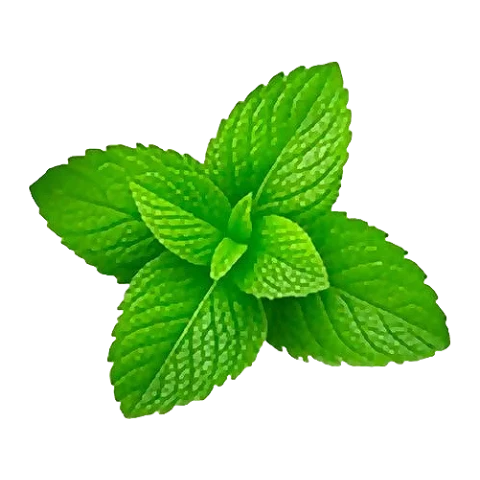
Invasive in the garden, fresh in cooking and in infusions.
- Season: May, June, July, August, September
- Peak season: June, July
- Botanical family: Lamiaceae
History
Mint, native to the Mediterranean and Asia, has been used since ancient times. In Greek mythology, the nymph Minthe was turned into a mint plant. The Romans used it to scent their baths and sauces.
Origin and growing regions
French mint is grown in regions known for aromatic plants:
- Île-de-France (Milly-la-Forêt)
- Pays de la Loire (Anjou)
- Provence
Milly-la-Forêt has long been France’s peppermint capital.
Benefits
Mint brings instant freshness:
- Menthol: Mainly in peppermint, it creates a cooling sensation.
- Digestion: Traditionally drunk as an infusion after meals.
- Versatile: As good in savoury dishes as in desserts.
- Flavour without salt: It lifts salads and tabbouleh.
Varieties
- Spearmint: The most common, for tabbouleh.
- Peppermint: Very fresh, for infusions.
- Moroccan mint: The one for mint tea.
- Chocolate mint: Smells of mint chocolate.
- Apple mint: Fuzzy leaves, mild taste.
Zero waste
- Storing: As a bunch in a glass of water, or in the fridge in a damp tea towel: 1 week.
- Freezing: Chopped in ice cubes with water: up to 6 months, perfect for drinks.
- Nothing goes to waste: The stems make an infusion. Wilted mint can be dried for tea.