Onion
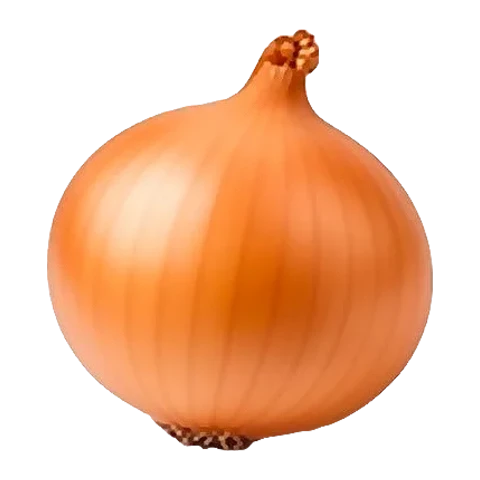
The base of almost every cuisine; the pink Roscoff onion has a PDO.
- Season: January, February, March, July, August, September, October, November, December
- Peak season: September, October
- Botanical family: Amaryllidaceae
History
Native to Central Asia, the onion has been grown for more than 5,000 years. In ancient Egypt, it fed the pyramid builders and symbolised eternity. Easy to store, it became the base of almost every cuisine in the world.
Origin and growing regions
Onions are grown in many French regions:
- Hauts-de-France
- Grand Est
- Brittany
- Cévennes
The pink Roscoff onion and the sweet Cévennes onion both have a PDO.
Benefits
The onion is humble but precious:
- Quercetin: An antioxidant found mostly in the outer layers.
- Prebiotic fibre: It feeds the gut flora.
- Low in calories: About 40 kcal per 100 g.
- Sulphur compounds: They are what makes you cry when you peel it.
Varieties
- Yellow: The most common, for cooking everything.
- Red: Mild, ideal raw in salads.
- White: Spring onion, sold in bunches in spring.
- Pink Roscoff: Breton PDO, mild and fruity.
- Sweet Cévennes: PDO, so mild you can eat it raw.
Zero waste
- Storing: Somewhere dry and airy, away from potatoes: several weeks. Once cut, in the fridge in a box.
- Freezing: Sliced raw or slow-cooked: up to 6 months.
- Nothing goes to waste: The skins colour and flavour a stock. A sprouting onion can still be cooked, or replanted.