Parsnip
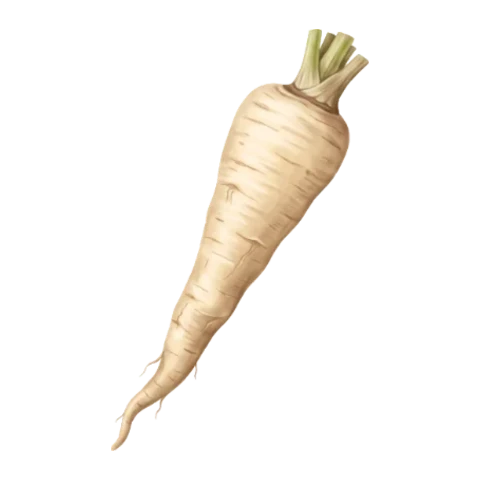
A white, sweet root with a nutty taste, back in fashion as mash and chips.
- Season: October, November, December, January, February, March
- Peak season: November, December, January
- Botanical family: Apiaceae
History
Parsnips were widely eaten in medieval Europe, where they were even used to sweeten dishes. They were gradually replaced by potatoes and carrots in the 19th century. Still popular in Britain, they have made a big comeback in France since the 2000s among the “forgotten vegetables”.
Origin and growing regions
Parsnips grow in deep, cool soils:
- Pays de la Loire
- Hauts-de-France
- Normandy
- Brittany
Benefits
The parsnip is mild and nourishing:
- Fibre: Very rich, for good digestion.
- Vitamin B9: Useful for growth.
- Potassium: Helps fluid balance.
- Energy: About 70 kcal/100 g, more than carrot.
Varieties
- Guernsey half-long: Old variety, long and mild.
- Tender and True: Slender, very sweet root.
- Round parsnip: Short and round.
- Gladiator: Big and even.
Zero waste
- Storing: In the crisper, in a paper bag: 2 to 3 weeks.
- Freezing: Peeled, in chunks, blanched 3 min: up to 8 months.
- Nothing goes to waste: Peelings make oven crisps. A soft parsnip ends up in mash or soup.