Watermelon
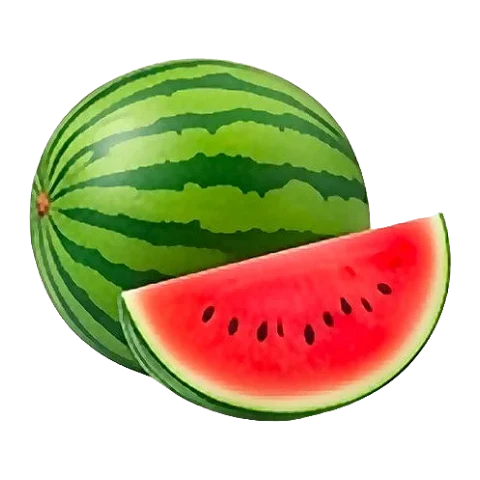
More than 90 % water; a hollow sound when you tap it is a good sign.
- Season: June, July, August
- Peak season: July, August
- Botanical family: Cucurbitaceae
History
Native to Africa, the watermelon was grown in Egypt more than 4,000 years ago: seeds have been found in pharaohs’ tombs. A precious water supply in dry regions, it spread around the Mediterranean and then all over the world.
Origin and growing regions
Watermelons sold in France come mostly from Spain, with some French production in the south:
- Spain (Andalusia, Murcia)
- Occitanie
- Provence
Benefits
Watermelon is summer’s most thirst-quenching fruit:
- Maximum hydration: About 92 % water.
- Lycopene: The same red antioxidant pigment as in tomatoes.
- Low in calories: About 30 kcal per 100 g.
- Citrulline: An amino acid found in large amounts in its flesh.
Varieties
- Crimson Sweet: Round and striped, sweet red flesh.
- Sugar Baby: Small, dark green rind.
- Yellow watermelon: Yellow flesh, honey taste.
- Seedless: Tiny white seeds, very handy.
Zero waste
- Storing: Whole, somewhere cool: 2 weeks. Cut, wrapped in the fridge: 3 to 4 days.
- Freezing: In cubes, for granitas and smoothies: up to 6 months.
- Nothing goes to waste: The white part of the rind can be made into jam or pickles. The juice makes lemonade.