Chilli
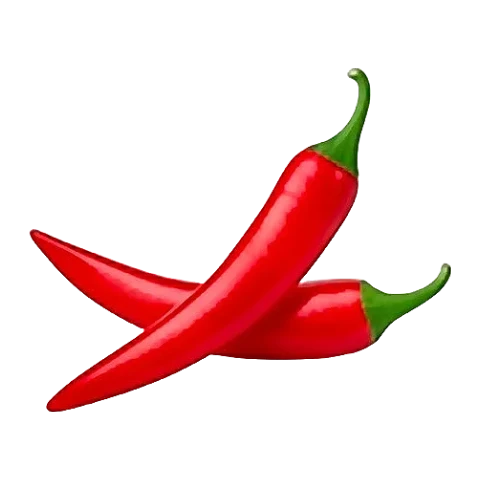
The pepper’s fiery cousin; Espelette pepper has a PDO.
- Season: July, August, September, October
- Peak season: August, September
- Botanical family: Solanaceae
History
Domesticated in Mexico about 6,000 years ago, the chilli crossed the Atlantic with Christopher Columbus, who thought he had found a new kind of pepper. It reached the Basque Country in the 16th century, where it was first used to preserve meat before becoming an iconic spice.
Origin and growing regions
France’s main chilli production is in the Basque Country:
- Basque Country (Espelette)
- South-West
Espelette pepper has a PDO (Protected Designation of Origin), which limits its growing area to about twenty villages.
Benefits
Used in small amounts, chilli brings much more than heat:
- Capsaicin: It stimulates saliva and gives a feeling of warmth.
- Vitamin C: Fresh chillies are rich in it.
- Flavour without salt: It lets you season dishes with less salt.
- Carotenoids: Especially in ripe red chillies.
Varieties
- Espelette pepper: Basque PDO, gentle, fragrant heat.
- Jalapeño: Medium hot, star of Mexican cooking.
- Cayenne: Long and thin, very hot, often dried.
- Bird’s eye: Tiny and very hot.
- Habanero: Among the hottest, with a fruity aroma.
Zero waste
- Storing: In the fridge, in a paper bag: 2 weeks. Or dried on a string, for several months.
- Freezing: Whole, raw: up to 12 months. Grate it straight from frozen.
- Nothing goes to waste: Too many chillies? Dry them, then blend them into powder, or put them in olive oil.