Pepper
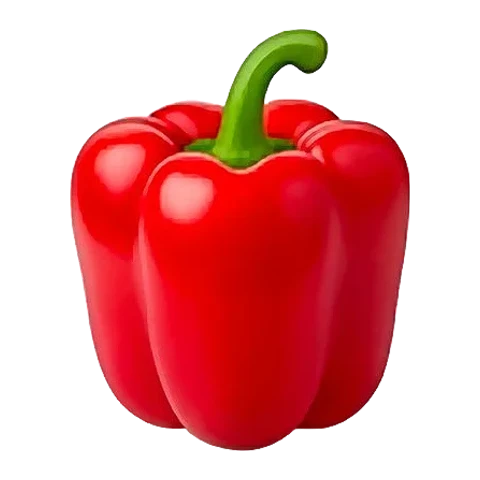
Green, yellow then red: it’s the same plant, picked at different stages of ripeness.
- Season: July, August, September, October
- Peak season: August, September
- Botanical family: Solanaceae
History
Native to Central and South America, the pepper was brought to Europe by Christopher Columbus as early as 1493. It spread first through Spain, then around the Mediterranean and into Central Europe, where Hungary turned it into its famous paprika.
Origin and growing regions
French peppers grow in the sun or in greenhouses:
- Provence-Alpes-Côte d’Azur
- Occitanie
- Brittany (greenhouse)
Benefits
Peppers, especially red ones, are packed with vitamins:
- Very rich in vitamin C: A red pepper contains more than an orange.
- Carotenoids: The riper it gets (green → yellow → red), the more it contains.
- Low in calories: About 25 kcal per 100 g.
- Fibre: Helps you feel full.
Varieties
- Red: The ripest and sweetest.
- Yellow: Mild and fruity.
- Orange: Mild, between yellow and red.
- Green: Picked before it’s ripe, more bitter.
- Bull’s horn: Elongated, thin flesh, perfect grilled.
Zero waste
- Storing: In the fridge, whole: 1 to 2 weeks. Cut, 3 days in a box.
- Freezing: Raw, in strips, without blanching: up to 10 months. Handy for stir-fries.
- Nothing goes to waste: A wrinkly pepper can be roasted in the oven and kept in oil. Throw away the seeds, not the rest.