Potato
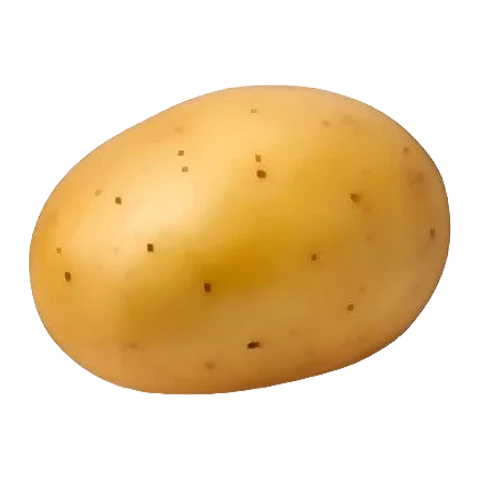
New potatoes in spring, stored ones the rest of the year: each variety has its use.
- Season: all year round
- Peak season: September, October
- Botanical family: Solanaceae
History
Domesticated in the Peruvian Andes about 8,000 years ago, the potato reached Spain in the 16th century. Long kept for livestock in France, it was made popular in the late 18th century by the pharmacist Antoine Parmentier, who is said to have had soldiers guard a field to spark Parisians’ curiosity.
Origin and growing regions
France is one of Europe’s leading potato producers and exporters:
- Hauts-de-France
- Grand Est
- Normandy
- Brittany
The potato from the Île de Ré has a PDO, as does the Béa du Roussillon.
Benefits
The potato is an energy-giving, complete food:
- Complex carbohydrates: Its starch provides lasting energy.
- Vitamin C: Especially in new potatoes.
- Potassium: An excellent source.
- Cooking in the skin: Keeps more vitamins and minerals.
Varieties
- Charlotte: Firm flesh, for steaming and salads.
- Bintje: Floury, the king of chips.
- Ratte: Small, with a nutty taste.
- Agata: All-rounder, often sold as a new potato.
- Vitelotte: Purple skin and flesh.
Zero waste
- Storing: In the dark, cool and dry, never in the fridge: several weeks. Not next to onions.
- Freezing: Raw, it turns black. Cooked as mash or blanched chips: up to 6 months.
- Nothing goes to waste: The peelings become crispy oven-baked crisps. Leftover mash makes potato cakes or a cottage pie. If it has sprouted, remove the sprouts and green parts.