Plum
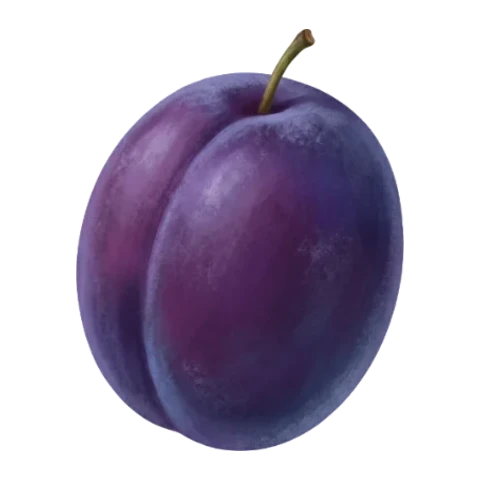
Mirabelle, greengage or damson: plums come in dozens of varieties.
- Season: July, August, September
- Peak season: August
- Botanical family: Rosaceae
History
Native to the Caucasus and Asia, the plum was already grown by the Romans. Crusaders are said to have brought back from Damascus the variety that would become the Agen prune. The greengage, “reine-claude” in French, is named after Claude of France, wife of King Francis I, and the mirabelle became the emblem of Lorraine.
Origin and growing regions
Each region has its own plum:
- Grand Est (Lorraine mirabelle)
- Nouvelle-Aquitaine (Ente plum, for Agen prunes)
- Occitanie (greengage)
- Alsace (quetsche)
Lorraine mirabelles and Agen prunes have a PGI.
Benefits
The plum is juicy and gentle on the tummy:
- Fibre: Aids digestion, especially dried as a prune.
- Vitamin K: Useful for blood clotting.
- Antioxidants: Especially in its coloured skin.
- Hydrating: About 85% water.
Varieties
- Mirabelle: Small and golden, emblem of Lorraine.
- Greengage: Green and very sweet.
- Quetsche: Purple and oval, for tarts.
- Ente plum: The one for Agen prunes.
- Golden Japan: Large yellow plum, very juicy.
Zero waste
- Storing: At room temperature to ripen, then in the fridge: 3 to 5 days.
- Freezing: Stoned, in halves: up to 12 months. Perfect for tarts.
- Nothing goes to waste: Overripe plums make jam, compote or a crumble.