Grape
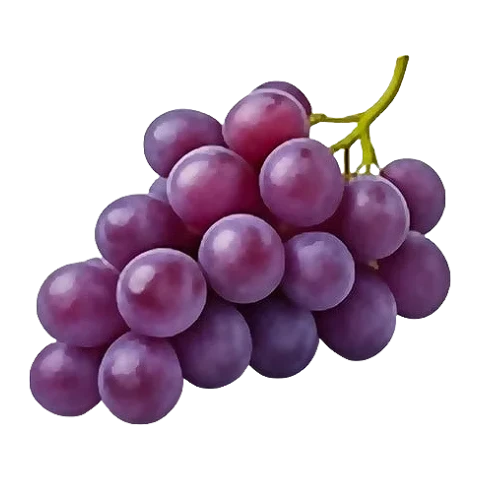
Each grape is a berry; Moissac Chasselas has a PDO.
- Season: August, September, October
- Peak season: September
- Botanical family: Vitaceae
History
Vines have been grown in the Caucasus for about 8,000 years. The Greeks introduced them to Gaul around 600 BC, in Marseille. Under François I, the “King’s Trellis” at Fontainebleau produced a famous Chasselas grape served at the royal table.
Origin and growing regions
French table grapes are grown in the south:
- Occitanie (Tarn-et-Garonne)
- Provence (Vaucluse)
Moissac Chasselas and Ventoux Muscat both have a PDO.
Benefits
Grapes are an energy-giving late-summer fruit:
- Polyphenols: Especially in the skin and seeds, such as resveratrol.
- Quick energy: Rich in natural sugars, about 70 kcal per 100 g.
- Potassium: Present in good amounts.
- Hydrating: About 80 % water.
Varieties
- Chasselas: Golden white, Moissac PDO.
- Muscat of Hamburg: Black, musky taste, Ventoux PDO.
- Italia: Big white grapes, muscat scent.
- Alphonse Lavallée: Black, big crunchy grapes.
- Seedless: Small grapes, often dried.
Zero waste
- Storing: In the fridge, on the bunch, unwashed: 1 week.
- Freezing: Picked off the stem, spread out: up to 12 months. Eat them frozen like sweets.
- Nothing goes to waste: Overripe grapes make juice, jelly or can be dried in the oven.