Rhubarb
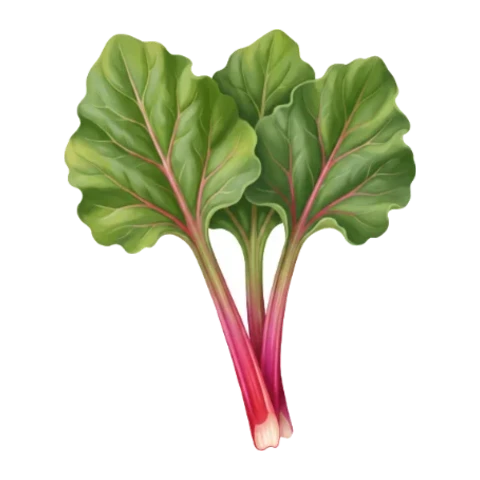
Long, tangy spring stalks, cooked like a fruit in tarts or compote.
- Season: April, May, June, July
- Peak season: May, June
- Botanical family: Polygonaceae
History
Native to China and Siberia, rhubarb was first a medicinal plant: its dried root was worth more than opium on trade routes. The English began cooking its stalks in the 18th century, in pies and crumbles. It then settled into gardens in northern and eastern France.
Origin and growing regions
Rhubarb likes cool, damp climates:
- Grand Est (Alsace, Lorraine)
- Hauts-de-France
- Normandy
- Auvergne-Rhône-Alpes
Benefits
Rhubarb is tangy and very light:
- Very low in calories: About 20 kcal/100 g without sugar.
- Fibre: Aids digestion.
- Vitamin K: Useful for blood clotting.
- Calcium: A good plant source.
Varieties
- Victoria: Green and pinkish stalks, very productive.
- Valentine: Deep red stalks, less sour.
- Glaskins Perpetual: Can be picked until late summer.
- Forced rhubarb: Grown in the dark, pink and tender stalks.
Zero waste
- Storing: Stalks without leaves, wrapped in a damp tea towel in the fridge: 1 week.
- Freezing: Raw, in chunks: up to 12 months. Perfect for pies.
- Nothing goes to waste: Peelings make a pink syrup. Leaves go in the compost, never on the plate.