Rosemary
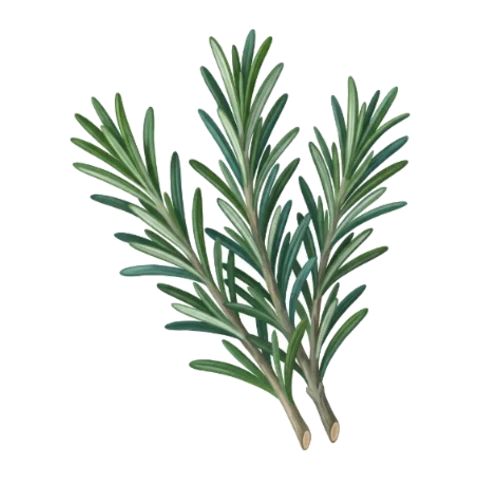
A Mediterranean shrub with fragrant needles, perfect with grilled meat and potatoes.
- Season: all year round
- Peak season: May, June, July
- Botanical family: Lamiaceae
History
Rosemary grows wild in the Mediterranean scrubland. The Greeks and Romans wove it into crowns and burnt it as incense. In the Middle Ages, it was believed to improve memory, and students wore sprigs during exams.
Origin and growing regions
French rosemary grows in the southern sun:
- Provence-Alpes-Côte d’Azur
- Occitanie
- Corsica
It is one of the herbes de Provence, which have a Label Rouge.
Benefits
Rosemary adds flavour and good things:
- Antioxidants: Very rich in them.
- Flavour without salt: It flavours roast meat and vegetables.
- Digestion: Traditionally used in tea.
- Keeps well: It keeps its flavour when dried.
Varieties
- Common rosemary: The classic, upright and very fragrant.
- Creeping rosemary: Spreads along the ground, ideal for edges.
- White-flowered rosemary: Rarer, very decorative.
- Miss Jessopp: Very upright, intense scent.
Zero waste
- Storing: Sprigs wrapped in a damp tea towel in the fridge: 2 weeks.
- Freezing: Whole sprigs, in a bag: up to 12 months.
- Nothing goes to waste: Woody stems make fragrant skewers. Dried sprigs flavour olive oil.