Thyme
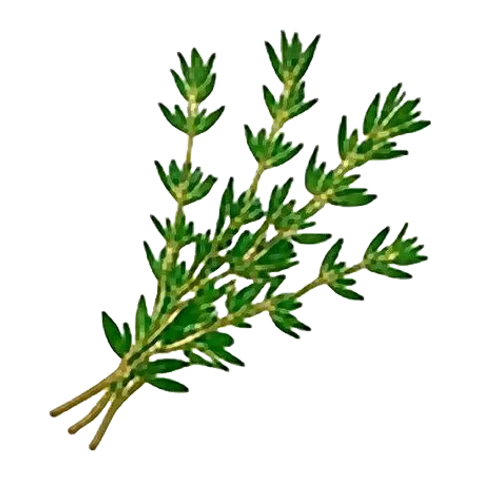
A herb of the Mediterranean scrubland, as good fresh as dried.
- Season: all year round
- Peak season: May, June
- Botanical family: Lamiaceae
History
A wild plant of the Mediterranean scrubland, thyme has been used since ancient times: the Egyptians used it for embalming, the Greeks burned it in temples, and the Romans scented their baths with it.
Origin and growing regions
French thyme is picked wild or grown in the south:
- Provence
- Occitanie
- Drôme
Herbes de Provence, in which thyme is a key ingredient, have a Label Rouge.
Benefits
Thyme is a generous herb:
- Thymol: The compound that gives thyme its strong scent.
- Infusion: Traditionally drunk as a herbal tea in winter.
- Stands up to cooking: Ideal in slow-cooked dishes.
- Flavour without salt: It lifts meat, vegetables and sauces.
Varieties
- Common thyme: The most used in cooking.
- Lemon thyme: Lemony scent, for fish.
- Wild thyme: Thyme that grows close to the ground.
- Orange thyme: Citrus scent.
Zero waste
- Storing: Dry, as a hanging bunch: several months. Fresh in the fridge: 2 weeks.
- Freezing: On the sprig, in a bag: up to 12 months.
- Nothing goes to waste: Thyme dries very well on its own. The sprigs flavour an oil or a herb salt.